Buying guides
What should call centre ai companies know before buying Indian speech data?
Updated 2026-08-01 · 4 min read
Short answer
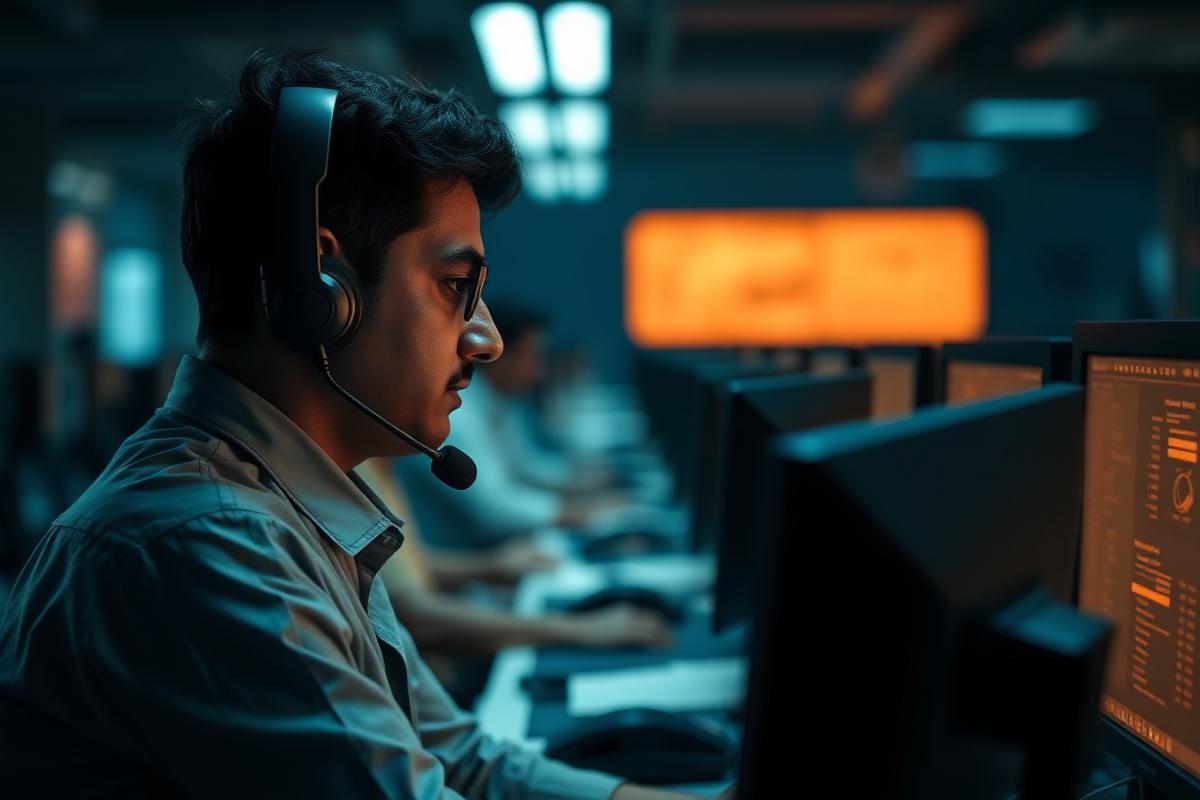
Agent-assist, QA-automation and voice-bot vendors serving Indian BPO and enterprise contact centres, working with narrowband telephony audio and heavy accent variation. Before contracting, fix three things: the corpus specification with measurable acceptance criteria, the evaluation method you will use on the pilot, and the contract terms covering consent, IP assignment and data handling. The recurring failure in this segment is production audio is 8 khz telephony; models trained on studio audio degrade sharply Vendors should be assessed on is narrowband simulated at capture, not by downsampling studio audio?, are agent and customer on separate channels? rather than on studio count or price per hour alone.
Key takeaways
- Typical ask: 100-300 hours of dual-channel simulated calls per language, with intent and outcome labels.
- Evaluate vendors on is narrowband simulated at capture, not by downsampling studio audio?, are agent and customer on separate channels?.
- Contract concerns that matter here: consented synthetic-scenario audio with no real customer pii, scenario library ownership
The problems that recur
Agent-assist, QA-automation and voice-bot vendors serving Indian BPO and enterprise contact centres, working with narrowband telephony audio and heavy accent variation.
- Production audio is 8 kHz telephony; models trained on studio audio degrade sharply
- Real call recordings carry consent and PII constraints that block their use for training
- Escalated and emotional speech is under-represented but drives the hardest failures
How to evaluate a data partner
Ask for a paid pilot delivered in your ingest format before volume. A vendor who cannot produce 10 hours to spec will not produce 1,000 to spec, and the pilot cost is trivial against the cost of discovering the mismatch late.
- Is narrowband simulated at capture, not by downsampling studio audio?
- Are agent and customer on separate channels?
- Are emotion and escalation variants available on demand?
Contract terms to insist on
Consent language must explicitly cover commercial AI model training and the term of use. Generic recording releases do not, and a corpus with defective consent is unusable regardless of its audio quality.
- Consented synthetic-scenario audio with no real customer PII
- Scenario library ownership
- Per-scenario volume guarantees
A typical engagement
100-300 hours of dual-channel simulated calls per language, with intent and outcome labels.
Scope is fixed in writing, priced fixed against that scope, piloted, then scaled with rolling batch delivery and weekly reporting so training is not blocked on a single final handover.
Services this segment usually buys
Most programmes in this segment combine call centre speech data, conversational speech data, audio annotation. Collection alone rarely solves the problem, because the annotation layer is what makes the audio trainable.
Frequently asked questions
What do call centre ai companies usually buy?
100-300 hours of dual-channel simulated calls per language, with intent and outcome labels.
How should we vet a vendor?
Is narrowband simulated at capture, not by downsampling studio audio?, Are agent and customer on separate channels?, Are emotion and escalation variants available on demand?
What contract terms matter most?
Consented synthetic-scenario audio with no real customer PII, Scenario library ownership, Per-scenario volume guarantees
Can we start with a pilot?
Yes — 10–20 hours delivered in your ingest format, validated against your pipeline before any volume commitment.
Related reading
Turn this into a dataset specification
Tell us the languages, speaker count and minutes. You get a written scope, a protocol and a fixed price within one working day.