മലയാളം · Malayalam · ml-IN
Malayalam AI Training Data Collection
We collect Malayalam speech and language data for AI training across Kerala, Lakshadweep, Puducherry (Mahe) and beyond, covering 5 dialect varieties rather than a single prestige standard.
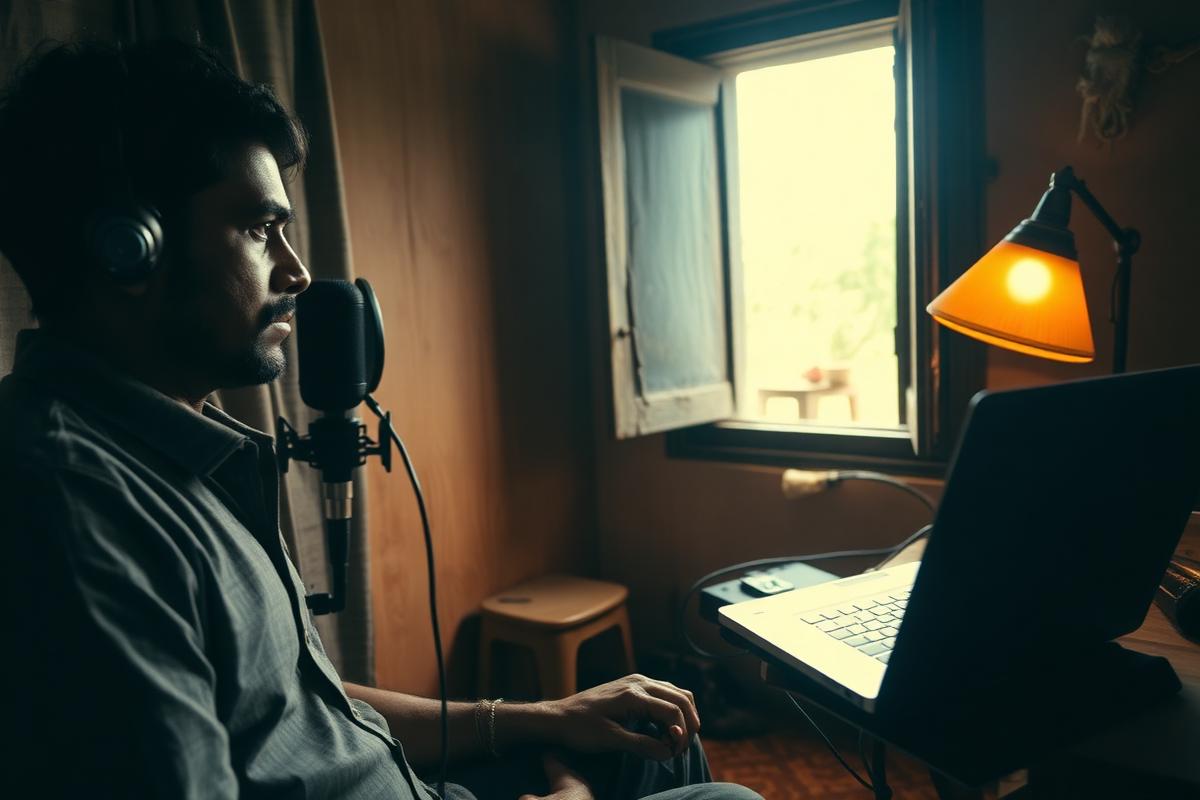
- Speakers
- 35M
- Script
- Malayalam
- Studio cities
- 5
- Typical programme
- 100-500 hours
Why Malayalam breaks generic speech models
Malayalam is not a variant of a language your model already handles. The specific properties below are the ones that show up as errors in production.
- One of the most consonant-dense Indian languages; long geminates and clusters raise word error rates sharply
- Very high speech rate compared with other Indian languages, which stresses streaming ASR
- Malabar Muslim (Mappila) speech includes Arabic-origin vocabulary absent from standard corpora
Dialects we cover
Malayalam has 5 varieties that matter for data collection. Collecting only the standard variety produces a model that works in the capital and fails everywhere else.
- Thiruvananthapuram
- Kochi (central)
- Malabar / Kozhikode
- Thrissur
- Kasaragod
Code-mixing reality
Manglish is standard in urban and professional speech, with heavy English noun and verb insertion.
Specify your expected English-token ratio in the brief. It is cheaper to collect the right mix than to filter the wrong one afterwards.
What is missing from public data
Central Kerala news-reading dominates public data. Malabar and southern varieties, and fast conversational speech generally, are missing.
This is the practical reason to commission collection rather than assemble open corpora: the gap in the public data is exactly the part your users occupy.
Transcription rules that decide whether the data is usable
These are the Malayalam-specific decisions that go into the style guide before any transcriber starts work.
- Old vs new script (chillu characters, Unicode normalisation) mixed within a dataset
- Fast speech leads to dropped-word transcription errors without a second-pass QA
- Dialect vocabulary from Malabar standardised away
Recording types available
- Fast spontaneous conversation with verbatim transcription
- Read prompts covering geminates and clusters
- Mappila Malayalam dialect sets from Kozhikode and Malappuram
Recommended cohort structure
Budget higher transcription effort per audio hour for Malayalam than for Hindi; speech rate and morphology make it slower to annotate.
| Dimension | Typical split | Why it matters for Malayalam |
|---|---|---|
| Gender | 50 / 50 | Pitch range differences change acoustic model behaviour; unbalanced cohorts bias recognition |
| Age | 18-25: 30%, 26-40: 40%, 41-60: 30% | Older speakers retain conservative Malayalam forms that younger urban speakers have lost |
| Region | Kerala / Lakshadweep / Puducherry (Mahe) and others | Dialect spread across 5 recognised varieties |
| Education | Mixed, including below-graduate | Prompt-reading fluency correlates with education and skews prosody |
| Condition | Studio / quiet room / field | Match the noise profile of your deployment |
Where we record
Malayalam sessions run in Kochi, Thiruvananthapuram, Kozhikode, Thrissur, Kannur. Multi-city fielding is the default because single-city cohorts carry an audible accent signature.
The numbers we hold ourselves to
- 100% of delivered files pass automated technical QA for SNR, clipping, duration and silence
- 5-25% of files pass a second native-speaker content review, stratified by city, dialect and transcriber, and escalating to 100% on any batch that fails the agreed threshold
- Accepted yield runs 85-90% for scripted speech, 60-70% for spontaneous, 55-65% for conversational and 50-60% for telephony
- Default cohort quotas: 50/50 gender, with age bands at 30% (18-25), 40% (26-40) and 30% (41-60)
- 48 kHz / 24-bit capture, delivered as 16-bit PCM WAV, with studio sessions held below a -50 dBFS noise floor
- First response within one working day; a scoped, fixed quote within two to three
These are the figures a delivery is measured against, not aspirations. A batch that misses them is re-recorded at our cost rather than repaired.
Frequently asked
How many Malayalam speakers can you field?
300-800 speakers for a standard programme, fielded across 5 cities. Budget higher transcription effort per audio hour for Malayalam than for Hindi; speech rate and morphology make it slower to annotate.
Do you transcribe Malayalam in Malayalam?
Yes, and we can deliver romanised or dual-script transcripts alongside. Old vs new script (chillu characters, Unicode normalisation) mixed within a dataset is one of the rules fixed in the style guide before work begins.
Can you collect dialect-specific Malayalam data?
Yes. Every speaker is tagged with region and dialect, so you can evaluate per variety after delivery instead of discovering the imbalance in production.
What about Malayalam-English code-mixing?
Manglish is standard in urban and professional speech, with heavy English noun and verb insertion.
Request a Malayalam dataset quote
Tell us the hours, speaker count and dialect spread you need. You get a scope, a timeline and a price.