Speech data collection · Indian English
Indian English Speech Data Collection
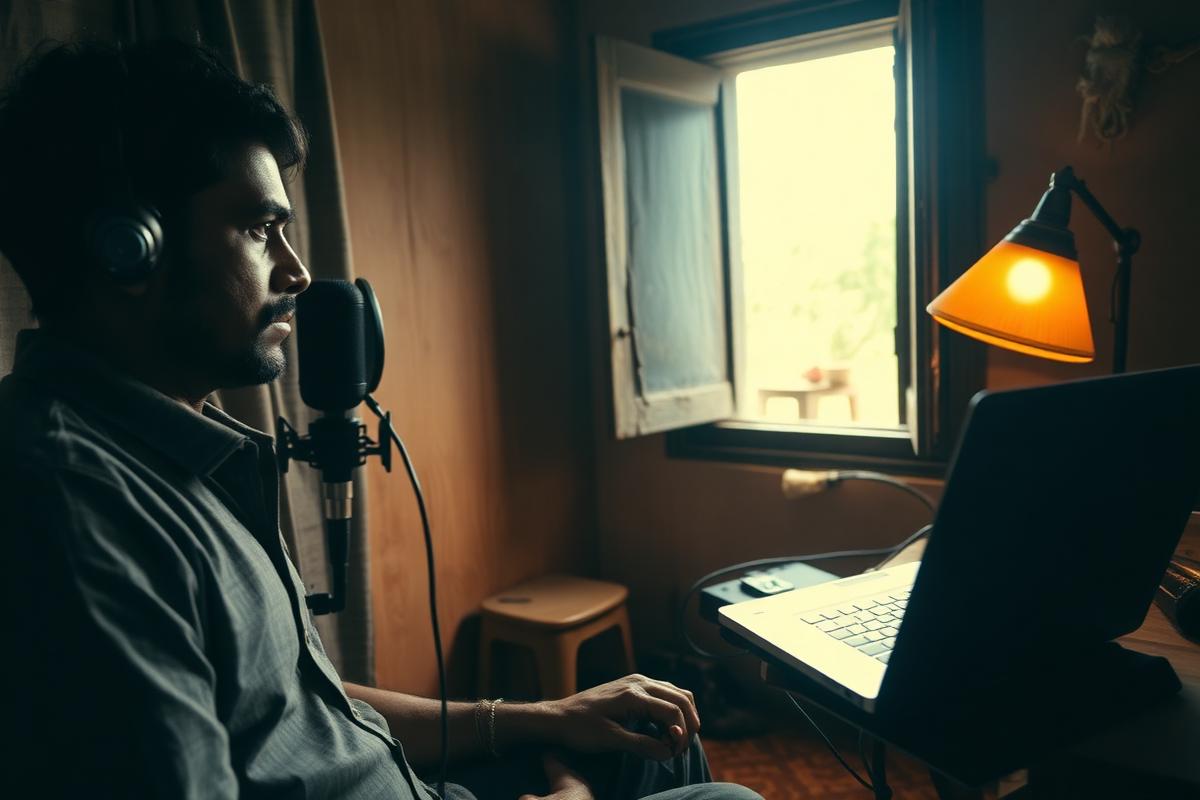
Recruited-speaker speech corpora recorded to a written specification: scripted prompts, spontaneous monologue, or both, with full speaker metadata. This page covers how that works specifically for Indian English, where retroflex realisation of /t/ and /d/.
- Language
- Indian English (en-IN)
- Dialects covered
- 5
- Typical programme
- 500-2,000 hours
- Cities
- Bengaluru, Delhi, Mumbai
What changes when the language is Indian English
The service specification stays constant across languages; the linguistics do not. For Indian English, three things drive the design of a speech data collection programme.
- Retroflex realisation of /t/ and /d/
- Dialect spread: North Indian (Hindi-substrate), Maharashtrian, South Indian (Tamil/Telugu/Kannada/Malayalam substrate), Bengali-substrate
- Indian English embeds Hindi and regional discourse markers, kinship terms, and food and place vocabulary that Western English lexicons lack.
Technical specification
| Parameter | Standard |
|---|---|
| Sample rate | 48 kHz capture, delivered at 48/16 kHz as required |
| Bit depth | 24-bit capture, 16-bit PCM delivery |
| Format | WAV (PCM), one file per utterance or per session |
| Channels | Mono per speaker; multi-channel on request |
| Noise floor | Studio sessions below -50 dBFS; field sessions specified per project |
| Clipping | Zero tolerance; clipped takes are re-recorded, not repaired |
Indian English cohort design
Balance by substrate language, not by city alone, and tag each speaker so accent-band evaluation is possible after delivery.
| Dimension | Typical split | Why it matters for Indian English |
|---|---|---|
| Gender | 50 / 50 | Pitch range differences change acoustic model behaviour; unbalanced cohorts bias recognition |
| Age | 18-25: 30%, 26-40: 40%, 41-60: 30% | Older speakers retain conservative Indian English forms that younger urban speakers have lost |
| Region | Pan-India, with distinct regional accent bands and others | Dialect spread across 5 recognised varieties |
| Education | Mixed, including below-graduate | Prompt-reading fluency correlates with education and skews prosody |
| Condition | Studio / quiet room / field | Match the noise profile of your deployment |
Process
- Requirement lock: languages, hours, speaker count, demographic quotas, recording conditions
- Prompt design and linguistic review by native reviewers
- Speaker recruitment and screening against quota, with consent capture
- Recording sessions with real-time level and prompt-coverage monitoring
- Automated technical QA on every file (SNR, clipping, duration, silence)
- Native-speaker content QA on a defined sample, escalating to 100% on failure
- Packaging, manifest generation and delivery
Indian English-specific quality rules
- Indian-specific vocabulary flagged as errors by spellcheck-driven QA
- Numbers spoken in lakhs and crores mis-normalised into millions
- Indian address and name spelling requires a domain-specific style guide
Every file passes automated technical checks. Content QA is sampled at 10% by default and raised per batch when the failure rate crosses the agreed threshold.
Deliverables
- Audio files in the agreed format and naming convention
- Per-utterance manifest (speaker ID, prompt ID, duration, condition)
- Speaker metadata: age band, gender, region, dialect, education band
- Consent records mapped to speaker IDs
- QA report with pass rates and rejection reasons
Worked example
A representative Indian English speech data collection engagement: 500 hours from 1,000 speakers, 50/50 gender, ages 18-45, spread across Bengaluru, Delhi, Mumbai, recorded to the specification above and delivered in WAV with a per-utterance manifest.
Timeline: Typical: 3-6 weeks for 100-500 hours in a single language; multi-language programmes run in parallel.
Where this data is missing today
Commercial English ASR is trained overwhelmingly on US and UK speech. Indian English accent data with substrate-language tagging is the fastest way to close the accuracy gap for Indian deployments.
Frequently asked
How much does Indian English speech data collection cost?
Priced per delivered hour or unit against a written spec. The cost drivers for Indian English are dialect spread, demographic narrowness and recording condition, in that order.
Which Indian English dialects are included?
By default North Indian (Hindi-substrate), Maharashtrian, South Indian (Tamil/Telugu/Kannada/Malayalam substrate), Bengali-substrate and others, tagged per speaker. You can also commission a single-dialect corpus if you are targeting one region.
Can you deliver Indian English data in our format?
Yes. Audio files in the agreed format and naming convention is the default, but naming, schema and directory structure follow your pipeline.
How long does a Indian English programme take?
Typical: 3-6 weeks for 100-500 hours in a single language; multi-language programmes run in parallel.
Request a Indian English speech data collection quote
Hours, speakers, dialects, deadline. Send what you have.