हिन्दी · Devanagari · hi-IN
Hindi AI Training Data Collection
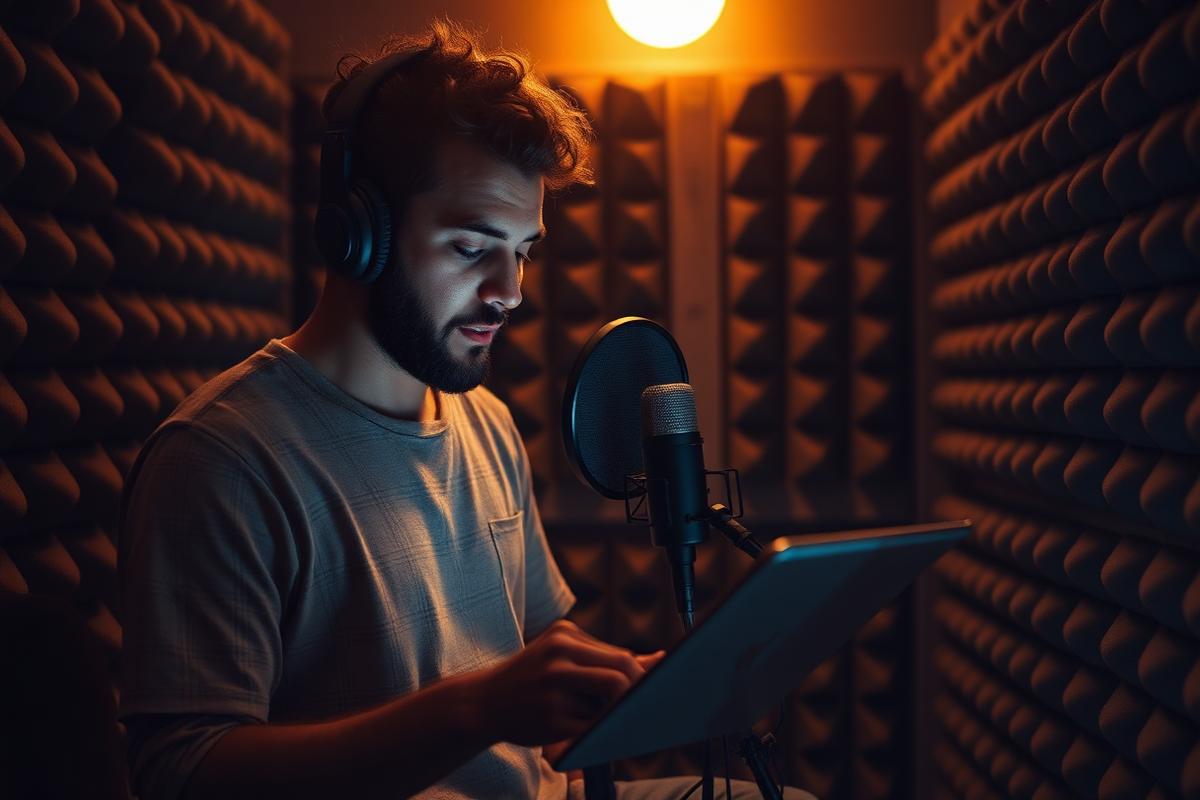
We collect Hindi speech and language data for AI training across Uttar Pradesh, Bihar, Madhya Pradesh and beyond, covering 7 dialect varieties rather than a single prestige standard.
- Speakers
- 528M
- Script
- Devanagari
- Studio cities
- 7
- Typical programme
- 500-2,000 hours
Why Hindi breaks generic speech models
Hindi is not a variant of a language your model already handles. The specific properties below are the ones that show up as errors in production.
- Four-way stop contrast (voiced/voiceless x aspirated/unaspirated) that collapses in models trained on English-first acoustic units
- Retroflex series ट ठ ड ढ ण routinely mis-mapped to alveolar /t/ /d/ by imported lexicons
- Nasalisation (chandrabindu) is phonemic and is dropped by most off-the-shelf G2P front-ends
- Schwa deletion in word-final position varies by region, so the same orthographic word yields different pronunciations
Dialects we cover
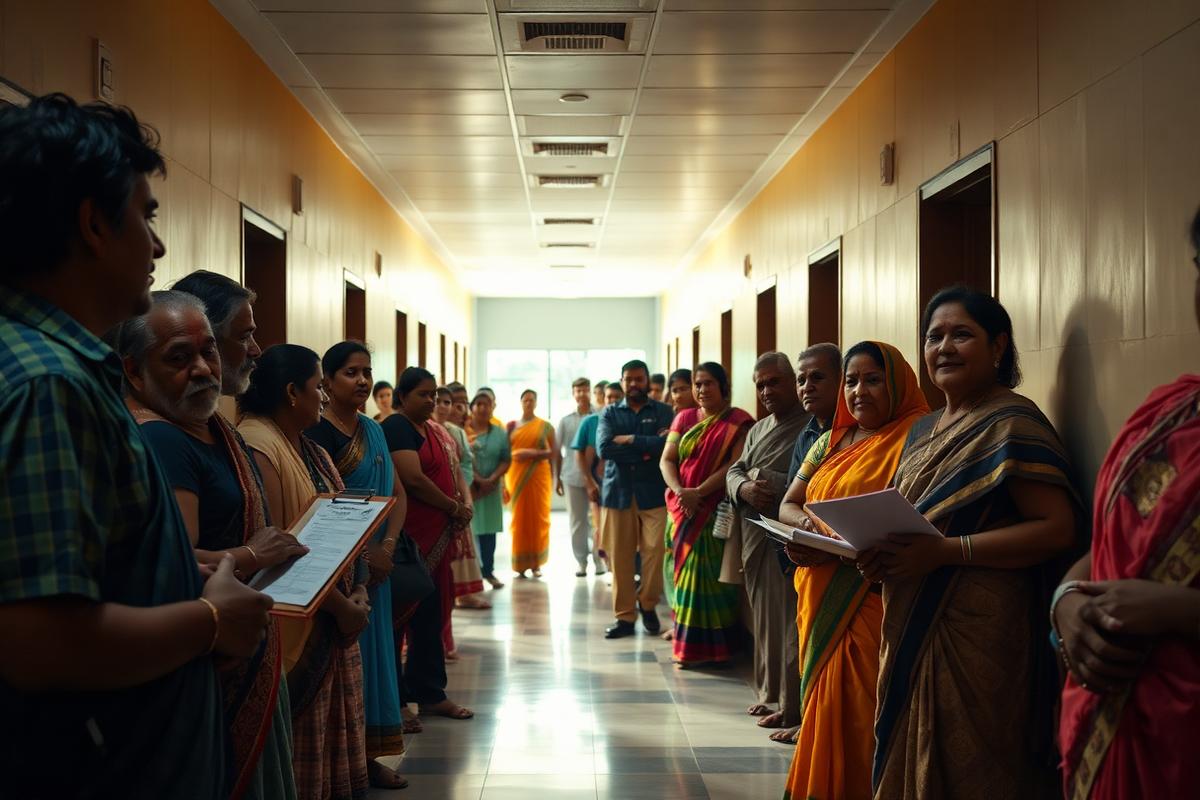
Hindi has 7 varieties that matter for data collection. Collecting only the standard variety produces a model that works in the capital and fails everywhere else.
- Khari Boli
- Awadhi
- Braj
- Bhojpuri-influenced Hindi
- Haryanvi
- Bundeli
- Marwari-influenced Hindi
Code-mixing reality
Urban Hindi speech is Hinglish in practice. Expect 15-40% English tokens in spontaneous speech: numbers, brands, technology terms, and whole clause switches. Any Hindi corpus that excludes English tokens will not match production traffic.
Specify your expected English-token ratio in the brief. It is cheaper to collect the right mix than to filter the wrong one afterwards.
What is missing from public data
Public Hindi corpora skew heavily towards read newspaper text from educated urban speakers in Delhi and NCR. Rural Bihar and eastern UP speech, elderly speakers, and low-literacy speakers reading prompts aloud are largely absent.
This is the practical reason to commission collection rather than assemble open corpora: the gap in the public data is exactly the part your users occupy.
Transcription rules that decide whether the data is usable
These are the Hindi-specific decisions that go into the style guide before any transcriber starts work.
- Inconsistent Devanagari vs romanised spelling for the same English loan word
- Nukta characters (क़ ख़ ग़ ज़ फ़) applied inconsistently by transcribers
- Numerals: whether to write digits, Devanagari numerals, or spelled-out words must be fixed in the style guide up front
- Honorific verb forms create long agreement chains that annotators shorten unless the guide forbids it
Recording types available
- Scripted prompt reading (phonetically balanced sentence sets)
- Wake-word and command-and-control utterances
- Digit strings, dates, amounts, and Indian address formats
- Two-party spontaneous conversation on everyday topics
- Simulated call-centre calls: billing, delivery, recharge, banking
Recommended cohort structure
Largest recruitment pool in the network. A 1,000-speaker Hindi cohort with balanced gender and 18-45 age bands is typically fielded across four cities to avoid a single-city accent bias.
| Dimension | Typical split | Why it matters for Hindi |
|---|---|---|
| Gender | 50 / 50 | Pitch range differences change acoustic model behaviour; unbalanced cohorts bias recognition |
| Age | 18-25: 30%, 26-40: 40%, 41-60: 30% | Older speakers retain conservative Hindi forms that younger urban speakers have lost |
| Region | Uttar Pradesh / Bihar / Madhya Pradesh and others | Dialect spread across 7 recognised varieties |
| Education | Mixed, including below-graduate | Prompt-reading fluency correlates with education and skews prosody |
| Condition | Studio / quiet room / field | Match the noise profile of your deployment |
Where we record
Hindi sessions run in Delhi, Lucknow, Jaipur, Patna, Bhopal, Indore, Varanasi. Multi-city fielding is the default because single-city cohorts carry an audible accent signature.
The numbers we hold ourselves to
- 100% of delivered files pass automated technical QA for SNR, clipping, duration and silence
- 5-25% of files pass a second native-speaker content review, stratified by city, dialect and transcriber, and escalating to 100% on any batch that fails the agreed threshold
- Accepted yield runs 85-90% for scripted speech, 60-70% for spontaneous, 55-65% for conversational and 50-60% for telephony
- Default cohort quotas: 50/50 gender, with age bands at 30% (18-25), 40% (26-40) and 30% (41-60)
- 48 kHz / 24-bit capture, delivered as 16-bit PCM WAV, with studio sessions held below a -50 dBFS noise floor
- First response within one working day; a scoped, fixed quote within two to three
These are the figures a delivery is measured against, not aspirations. A batch that misses them is re-recorded at our cost rather than repaired.
Frequently asked
How many Hindi speakers can you field?
1,000-3,000 speakers for a standard programme, fielded across 7 cities. Largest recruitment pool in the network. A 1,000-speaker Hindi cohort with balanced gender and 18-45 age bands is typically fielded across four cities to avoid a single-city accent bias.
Do you transcribe Hindi in Devanagari?
Yes, and we can deliver romanised or dual-script transcripts alongside. Inconsistent Devanagari vs romanised spelling for the same English loan word is one of the rules fixed in the style guide before work begins.
Can you collect dialect-specific Hindi data?
Yes. Every speaker is tagged with region and dialect, so you can evaluate per variety after delivery instead of discovering the imbalance in production.
What about Hindi-English code-mixing?
Urban Hindi speech is Hinglish in practice. Expect 15-40% English tokens in spontaneous speech: numbers, brands, technology terms, and whole clause switches. Any Hindi corpus that excludes English tokens will not match production traffic.
Request a Hindi dataset quote
Tell us the hours, speaker count and dialect spread you need. You get a scope, a timeline and a price.