Voice & TTS
How do you record a Kannada TTS voice dataset?
Updated 2026-08-01 · 4 min read
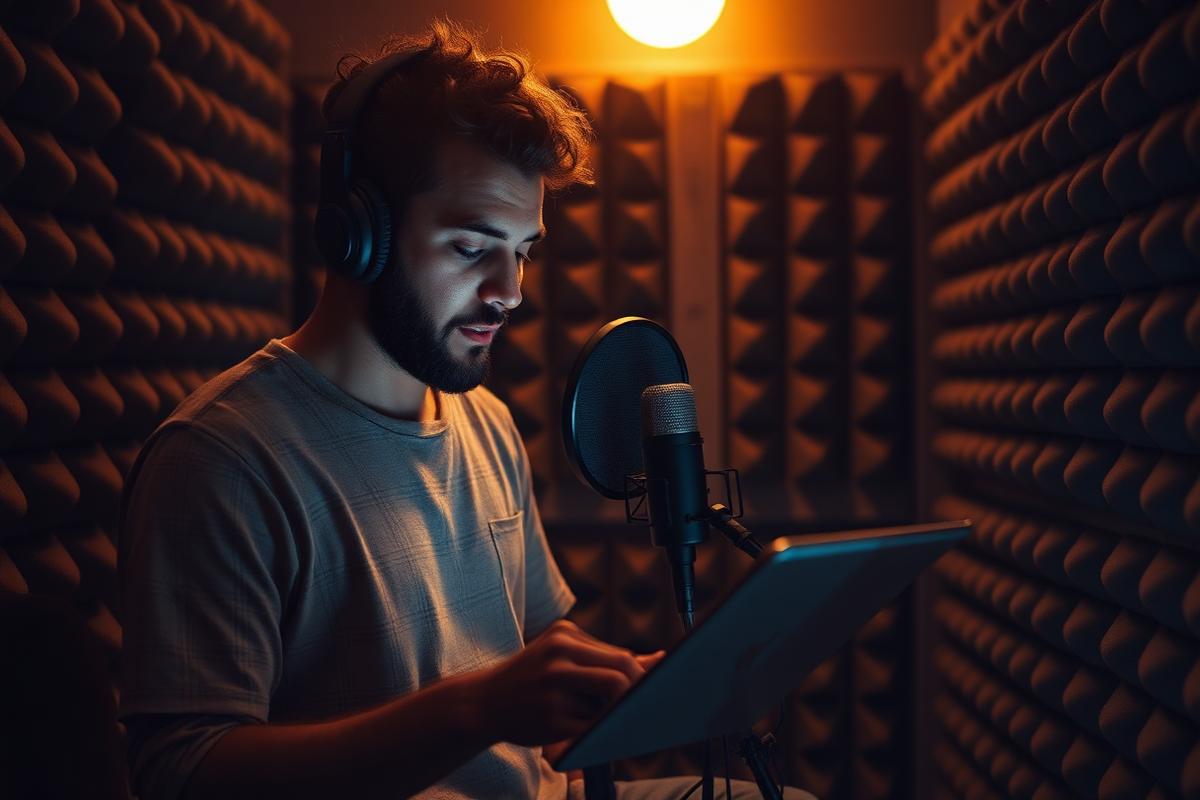
Short answer
A Kannada TTS corpus is built from one voice, not many. Select a talent whose Kannada is dialect-neutral enough for your audience, record 10–30 hours of phonetically balanced prompts at 48 kHz / 24-bit in a treated room with a fixed capture chain, and hold the same mic distance, energy and pace across every session. Coverage of North Karnataka speech has markedly different intonation and lexicon from Mysuru standard, Retroflex ಳ and the archaic ಱ appear in older speakers and place names, Vowel harmony effects in colloquial speech that literary prompts never surface matters more than raw hours, and the corpus must include the numbers, dates, abbreviations and English loanwords your product will actually speak. Deliver per-utterance WAV files with verified Kannada text, alignment-ready and free of room-tone drift.
Key takeaways
- Consistency across sessions is the single biggest quality factor in a TTS corpus.
- 10–30 hours of one clean voice beats 200 hours of mixed speakers for neural TTS.
- Script coverage must include the awkward material: numerals, currency, dates, addresses and English loanwords.
Selecting the voice
Choose for stamina and stability, not for character. The talent will record for weeks, and a voice that drifts in energy between sessions produces a synthetic voice with audible seams.
For Kannada, dialect neutrality is a product decision. Bangalore urban, Mysuru (standard literary), Dharwad / North Karnataka all exist; picking a regionally marked variety is legitimate if your users are there, but it should be a deliberate choice recorded in the specification.
Script design for Kannada
- Phonetic balance across North Karnataka speech has markedly different intonation and lexicon from Mysuru standard, Retroflex ಳ and the archaic ಱ appear in older speakers and place names, Vowel harmony effects in colloquial speech that literary prompts never surface
- Numerals, currency, dates, times and phone numbers in spoken form
- English loanwords and brand names as they occur in Kannada speech
- Question, exclamation and continuation prosody in sufficient density
- Long sentences for prosody modelling and short ones for prompt-style responses

Studio specification
| Parameter | Standard |
|---|---|
| Sample rate / depth | 48 kHz / 24-bit, mono |
| Room | Treated booth, noise floor below −60 dBFS |
| Chain | Fixed mic, preamp and distance, logged per session |
| Session length | Maximum 3–4 hours with breaks to protect vocal consistency |
| Validation | Per-take check for plosives, sibilance, clipping and room-tone drift |
Text verification and delivery
Every utterance ships with verified text in Kannada. Northern lexical items replaced with standard equivalents Mismatched text and audio is the most common reason a TTS corpus fails alignment.
Delivery is per-utterance WAV with a manifest mapping file to text, plus speaker and session metadata and the signed talent release covering synthetic voice creation.
Licensing the voice
Voice talent releases must explicitly cover synthetic voice creation, commercial deployment and the term of use. A generic voice-over release does not grant the right to build a synthetic voice, and discovering that after training is expensive.
Frequently asked questions
How many hours are needed for a Kannada neural TTS voice?
10–20 hours of consistent single-speaker audio is the common range for a production neural voice; 3–5 hours can work for fine-tuning an existing multilingual model.
Can multiple speakers be mixed?
Only for multi-speaker or speaker-adaptive models. For a single brand voice, mixing speakers introduces artefacts.
What sample rate should Kannada TTS data use?
48 kHz / 24-bit capture, downsampled later if your vocoder needs it. Capturing at the target rate throws away headroom you cannot recover.
Do you handle voice talent licensing?
Yes — releases explicitly cover synthetic voice creation and commercial deployment, and are delivered with the corpus.
Related reading
Turn this into a dataset specification
Tell us the languages, speaker count and minutes. You get a written scope, a protocol and a fixed price within one working day.