Service explainers
What is conversational speech data and how does it work?
Updated 2026-08-01 · 4 min read
Short answer
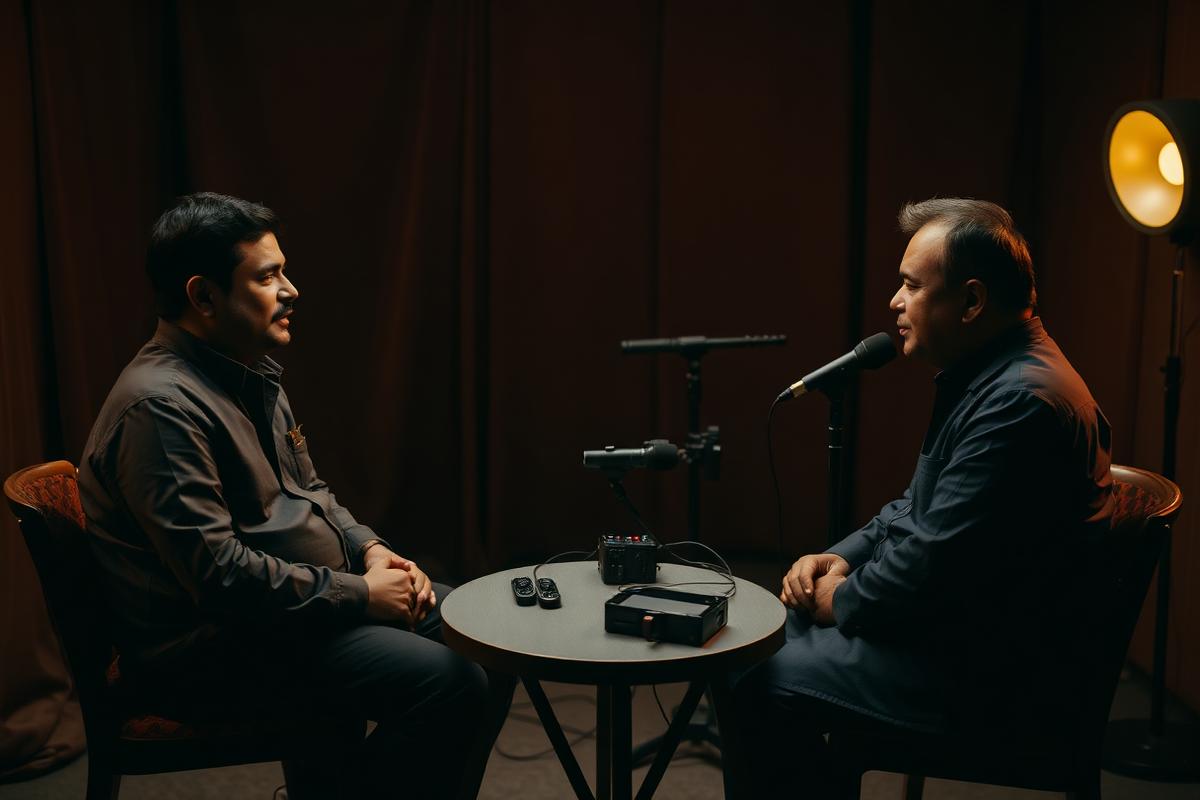
Natural two-party and multi-party conversation recorded with separate channels per speaker, covering the overlaps, interruptions and turn-taking that scripted data never produces. In practice the work runs as scenario design so conversations stay on-domain without becoming scripted, then speaker pairing by familiarity level as specified, then multi-channel recording with per-speaker isolation, and you receive per-speaker channels plus mixed reference, turn-level transcripts. 4-7 weeks for 100-300 hours in one language.
Key takeaways
- Conversations are checked for naturalness, not just audio quality. Sessions that drift into reading are rejected.
- Typical buyers: Diarisation, Conversational ASR, Dialogue modelling.
- Recruitment approach: Pairs are recruited together where familiarity matters; stranger pairs are used when the deployment target is customer support.
What the service covers
Natural two-party and multi-party conversation recorded with separate channels per speaker, covering the overlaps, interruptions and turn-taking that scripted data never produces.
- Per-speaker channels plus mixed reference
- Turn-level transcripts
- Overlap and backchannel tags
- Conversation metadata
Technical specification
These are defaults, not limits. Where your pipeline requires different values, they replace ours in the statement of work rather than being converted after delivery.
| Parameter | Standard |
|---|---|
| Channels | One channel per speaker, time-aligned |
| Duration | 15-60 minutes per conversation |
| Topics | Scenario cards, free topics, or your domain scripts |
| Overlap | Preserved and tagged, never edited out |
| Metadata | Relationship between speakers, familiarity, topic, setting |
How the work runs
- Scenario design so conversations stay on-domain without becoming scripted
- Speaker pairing by familiarity level as specified
- Multi-channel recording with per-speaker isolation
- Diarisation-ready packaging
- Verbatim transcription with speaker turns and overlap tags
Quality control and acceptance
Conversations are checked for naturalness, not just audio quality. Sessions that drift into reading are rejected.
Failures are remedied by re-collection rather than by editing delivered files, because repaired audio carries artefacts that survive into the trained model.
Who this is for
Recruitment for this service works as follows. Pairs are recruited together where familiarity matters; stranger pairs are used when the deployment target is customer support.
- Diarisation
- Conversational ASR
- Dialogue modelling
- Call analytics
Timelines
4-7 weeks for 100-300 hours in one language.
Multi-language programmes run in parallel rather than in sequence, so a five-language scope does not take five times as long.
Frequently asked questions
What is included in conversational speech data?
Per-speaker channels plus mixed reference, Turn-level transcripts, Overlap and backchannel tags, delivered against a written specification with acceptance criteria attached.
How long does conversational speech data take?
4-7 weeks for 100-300 hours in one language.
How is quality measured?
Conversations are checked for naturalness, not just audio quality. Sessions that drift into reading are rejected.
Which languages are supported?
Fifteen Indian languages plus Indian English, including Hindi, Marathi, Tamil, Telugu, Kannada.
Related reading
Turn this into a dataset specification
Tell us the languages, speaker count and minutes. You get a written scope, a protocol and a fixed price within one working day.