Catalogue · Indian English
Ready-made Indian English speech datasets
Corpora already recorded in Indian English and available under licence, plus what to check before buying existing data instead of commissioning a build.
- Language
- Indian English (en-IN)
- Licence
- Perpetual, commercial, model-training permitted
- Availability
- Subject to consent scope; confirmed on enquiry
- Lead time
- Days, not weeks
Available corpus types
| Corpus | Typical band | Annotation | Best for |
|---|---|---|---|
| Indian English scripted speech | 100-500 hours | Verbatim + timestamps | Prompt-read speech from a phonetically balanced script, the baseline corpus type for ASR and TTS training. |
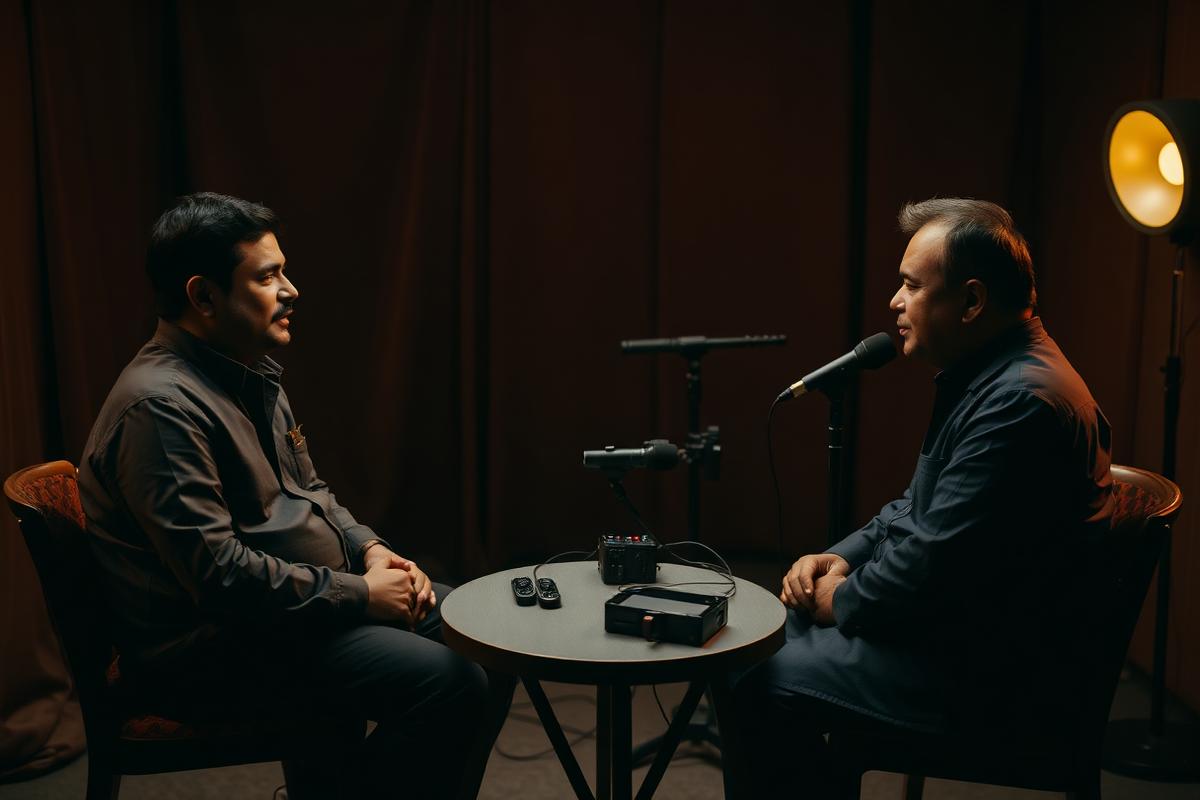
| Indian English spontaneous speech | 100-500 hours | Verbatim + timestamps | Unscripted monologue on prompted topics, which carries the disfluencies and prosody that scripted data never produces. |
| Indian English conversational speech | 100-500 hours | Verbatim + speaker turns + timestamps | Two-party conversation recorded on separate channels, with overlap and turn-taking preserved. |
| Indian English telephony speech | 50-300 hours | Verbatim + timestamps | Narrowband call audio captured over a telephony path, matching what a deployed contact-centre model actually receives. |
Availability is confirmed per enquiry. Some material can only be licensed within the consent scope the speakers originally agreed to, and we will not stretch that to close a sale.
Ready-made versus commissioned
| Ready-made | Commissioned build | |
|---|---|---|
| Lead time | Days | 3-16 weeks |
| Cost per hour | Lower | Higher |
| Cohort control | Fixed by the original spec | Yours |
| Dialect quotas | As recorded | Designed |
| Exclusivity | Non-exclusive | Exclusive if you want it |
| Best for | Baselines, prototypes, augmentation | Production models |
What to check before licensing existing data
- Consent scope: does it permit commercial model training, and by a third party?
- Dialect distribution: a corpus that is 90% one urban variety will not generalise across Pan-India, with distinct regional accent bands
- Recording conditions: studio-only data underperforms badly on noisy deployments
- Transcription convention: Indian-specific vocabulary flagged as errors by spellcheck-driven QA will otherwise surface as tokenisation noise
- Overlap: check whether the corpus already sits in the public sets you trained on
Where the public corpora fall short
Commercial English ASR is trained overwhelmingly on US and UK speech. Indian English accent data with substrate-language tagging is the fastest way to close the accuracy gap for Indian deployments.
This is usually the reason buyers move from licensing to commissioning: the free and cheap material covers the easy half of the language.
What a usable Indian English corpus has to cover
- Dialect spread across North Indian (Hindi-substrate), Maharashtrian, South Indian (Tamil/Telugu/Kannada/Malayalam substrate), Bengali-substrate rather than a single prestige variety
- The phonetic contrasts that Indian English models actually get wrong: Retroflex realisation of /t/ and /d/
- Code-mixed speech transcribed rather than discarded — Indian English embeds Hindi and regional discourse markers, kinship terms, and food and place vocabulary that Western English lexicons lack.
- Recording geography covering Bengaluru, Delhi, Mumbai, Chennai, since dialect follows location
- Utterance types beyond read prompts: Accent-band balanced read speech with substrate tags, Business and support calls in English, Indian names, addresses, PIN codes and lakh/crore amounts
Balance by substrate language, not by city alone, and tag each speaker so accent-band evaluation is possible after delivery.
Frequently asked
Can I buy an existing Indian English dataset today?
Where a corpus exists within an appropriate consent and licence scope, yes — usually within days. We confirm availability against your intended use before quoting.
Is the licence exclusive?
Ready-made corpora are licensed non-exclusively. Exclusivity is available on commissioned builds.
Can we augment a ready-made corpus with new recordings?
That is the most common pattern: licence the base, then commission the dialects, conditions or domain vocabulary it lacks.
Do you provide a data sheet?
Yes — speaker counts, demographic distribution, condition mix, annotation convention and known limitations, before you commit.
Related pages
Check Indian English availability
Tell us the hours, corpus type and intended use. We confirm what is licensable now and what needs recording.