Dataset specification · Domain scale
250 hours of Bengali Scripted Speech
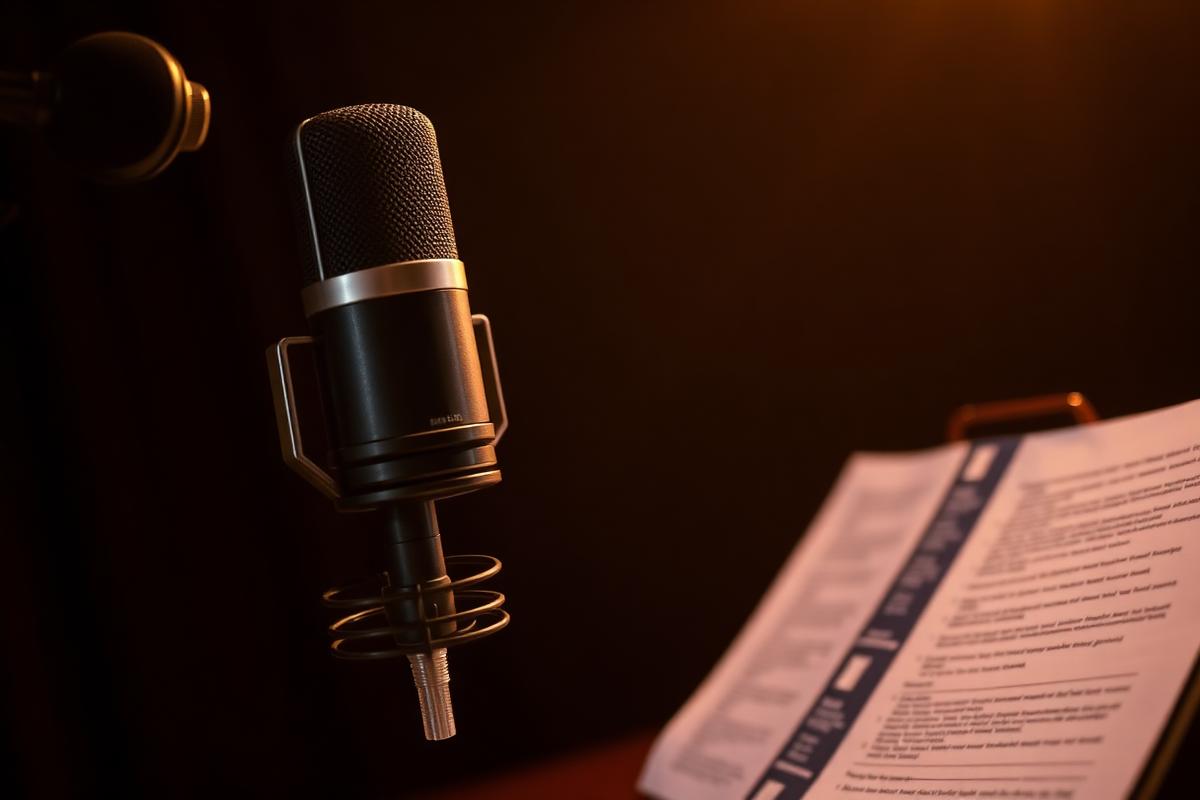
A domain scale build of 250 hours of Bengali scripted speech. Fine-tuning a production model for a specific domain, accent range or deployment condition. Speakers read prompts from a phonetically balanced script shown one line at a time, with retakes on any flubbed or misread line.

- Volume
- 250 hours
- Scale
- Domain scale
- Per speaker
- 20–30 minutes of accepted audio per speaker
- Accepted yield
- 85–90% of recorded time is accepted
How Bengali scripted speech is captured
Speakers read prompts from a phonetically balanced script shown one line at a time, with retakes on any flubbed or misread line.
A 45-minute booth session yields roughly 300–400 prompts. One file per utterance, cut at the prompt boundary, so alignment is exact before any forced-alignment pass runs.
Yield at this style: 85–90% of recorded time is accepted. Prompt-level retakes catch problems inside the session, so very little is discarded afterwards. This is the highest-yield style we run.
The specification
| Field | Value |
|---|---|
| Language | Bengali (bn-IN, Bengali) |
| Volume | 250 hours |
| Equivalent | 500 speakers at 30 minutes each, or 250 speakers at one hour each |
| Speech type | Scripted Speech |
| Per speaker | 20–30 minutes of accepted audio per speaker |
| File granularity | One WAV per prompt, named by prompt ID and speaker ID |
| Prompt coverage | Triphone-balanced script with digit, date, name and domain-lexicon blocks |
| Leading/trailing silence | 200 ms padded, verified automatically on every file |
| Alignment | Prompt text is ground truth; deviations are flagged rather than silently corrected |
| Dialects | Kolkata standard (Rarhi), Sylheti-influenced, Rangpuri / North Bengal, Medinipuri |
| Transcription | Verbatim, native-speaker, second-pass reviewed |
Designing the script for Bengali
- Script built for triphone coverage rather than word coverage, so rare phone contexts appear often enough to train on
- Digit strings, dates, currency and person names blocked separately, because these are where deployed ASR actually fails
- Domain lexicon injected from your product vocabulary when you supply one
- Sentence-length distribution spread deliberately, since all-short prompts produce a model that cannot handle long utterances
- Built against Bengali specifically: Inherent vowel is realised as /ɔ/ or /o/, which breaks G2P rules copied from Devanagari-based systems
- Code-mixing handled explicitly rather than edited out — Kolkata professional speech mixes English heavily; rural West Bengal much less. A single 'Bengali' dataset without register tags conflates two very different acoustic and lexical distributions.
Running a domain scale Bengali build
Six to eight weeks. Beyond three cities the bottleneck moves from recruitment to transcription throughput, which is why the transcriber count rises faster than the engineer count.
Four to five batches on a fortnightly cadence, sequenced so the dialects you care about most land first.
Tag every speaker as Indian Bengali and record district of origin; mixing in Bangladeshi speech without tags is a common and costly dataset defect.
| Parameter | At this volume |
|---|---|
| Cities | Three to four — Kolkata, Siliguri, Durgapur, Agartala |
| Studios | Three to four rooms plus one mobile rig |
| Recruiters | Four coordinators under one programme lead |
| Speakers | ~500–600 |
| Sessions per day | 25–30 nationally |
| Team | 1 programme lead, 4 coordinators, 8 engineers, 14 transcribers, 2 QA leads |
Cohort design
At 250 hours quotas are enforced per dialect and reconciled fortnightly. Aggregate demographics are reported per batch so drift is visible while there is still time to correct it.
Requires literate speakers comfortable reading aloud in the target script, which is the main constraint on cohort breadth and has to be actively counterweighted.
| Dimension | Typical split | Why it matters for Bengali |
|---|---|---|
| Gender | 50 / 50 | Pitch range differences change acoustic model behaviour; unbalanced cohorts bias recognition |
| Age | 18-25: 30%, 26-40: 40%, 41-60: 30% | Older speakers retain conservative Bengali forms that younger urban speakers have lost |
| Region | West Bengal / Tripura / Assam (Barak Valley) and others | Dialect spread across 5 recognised varieties |
| Education | Mixed, including below-graduate | Prompt-reading fluency correlates with education and skews prosody |
| Condition | Studio / quiet room / field | Match the noise profile of your deployment |
Bengali-specific considerations
- Inherent vowel is realised as /ɔ/ or /o/, which breaks G2P rules copied from Devanagari-based systems
- Kolkata professional speech mixes English heavily; rural West Bengal much less. A single 'Bengali' dataset without register tags conflates two very different acoustic and lexical distributions.
- Indian Bengali is under-collected relative to Bangladeshi Bengali, and North Bengal and Tripura varieties are almost entirely missing.
Quality gates for scripted speech
- Prompt-to-audio match verified by a native reviewer; a misread line is a rejected file, not an edited transcript
- Hyperarticulation flagged — a speaker over-enunciating because they are reading produces audio that does not match deployment
- Clipping and truncation checked at both utterance boundaries
- Per-speaker prompt coverage confirmed, so no speaker silently skips a block
- Three sibilant characters chosen inconsistently for the same sound
- Bangladeshi vs Indian Bengali orthographic conventions mixed within one dataset
100% technical QA, 15% content QA with stratified sampling across city, dialect and transcriber, so no single team's output goes unchecked.
What goes wrong on scripted speech sessions
- Reading voice: flat prosody and unnatural stress that trains a model on speech nobody actually produces
- Prompt fatigue in the back half of long sessions, where accuracy drops and pace flattens
- Speakers who are not fluent readers, which quietly biases the cohort toward higher education bands
- Script leakage across speakers, producing a corpus that memorises sentences instead of covering sounds
Risks at domain scale in Bengali
Cost at this band is driven by: Transcription depth — verbatim with disfluencies costs materially more than clean-read transcription; Number of distinct dialect quotas rather than raw hours.
- Transcription becomes the critical path and stays there for the rest of the volume bands
- Coordinator turnover mid-build causes quota drift that is only visible in the final demographic report unless it is audited weekly
- Bengali carries 5 recognised varieties across West Bengal, Tripura, Assam (Barak Valley), so the quota matrix is wider than the headline volume suggests
- Indian Bengali is under-collected relative to Bangladeshi Bengali, and North Bengal and Tripura varieties are almost entirely missing.
Deliverables
- WAV audio to your naming convention, with the per-file manifest
- Verbatim Bengali transcripts with utterance-level timestamps
- Prompt ID mapped to every utterance
- Verbatim deviation flags where the speaker departed from the script
- Per-utterance SNR and duration in the manifest
- Per-speaker metadata: age band, gender, region, dialect, education band
- Consent records mapped to speaker IDs
- QA report with pass rates, rejection reasons and agreement statistics
- Speaker-disjoint train / dev / test splits on request
What this trains, and what it does not
- ASR acoustic model baselines
- TTS voice building where a single speaker is recorded at depth
- Pronunciation lexicon and G2P validation
- Forced-alignment and phone-boundary work
Scripted audio contains no disfluencies, no false starts and no natural turn-taking. A model trained on it alone degrades sharply on real spontaneous input, so it is a baseline layer rather than a complete training set.
Frequently asked
Is 250 hours of Bengali enough?
Enough to shift word error rate meaningfully on a domain-specific deployment. For a general-purpose model in a low-resource language, still a starting layer.
Why scripted speech rather than another speech type?
ASR acoustic model baselines, TTS voice building where a single speaker is recorded at depth, Pronunciation lexicon and G2P validation are what this style is the right input for. Scripted audio contains no disfluencies, no false starts and no natural turn-taking. A model trained on it alone degrades sharply on real spontaneous input, so it is a baseline layer rather than a complete training set.
How long does a domain scale Bengali build take?
Six to eight weeks. Beyond three cities the bottleneck moves from recruitment to transcription throughput, which is why the transcriber count rises faster than the engineer count. Four to five batches on a fortnightly cadence, sequenced so the dialects you care about most land first.
What does 250 hours of Bengali scripted speech cost?
Quoted per delivered hour against this specification. At this band the drivers are transcription depth — verbatim with disfluencies costs materially more than clean-read transcription and number of distinct dialect quotas rather than raw hours. Send the spec and you get one fixed figure.
How much QA is applied at this volume?
100% technical QA, 15% content QA with stratified sampling across city, dialect and transcriber, so no single team's output goes unchecked.
Quote this Bengali dataset
250 hours, scripted speech, Bengali — domain scale. Adjust anything and send it.