TTS Voice Building · ಕನ್ನಡ
Kannada Data for TTS Voice Building
Creating a natural synthetic voice in an Indian language, from casting through to a trainable studio corpus. In Kannada, the binding constraint is usually dialect coverage and code-mixing, not raw hours.
- Language
- Kannada
- Primary metric
- MOS naturalness
- Typical volume
- 250-1,000 hours
Data profile required
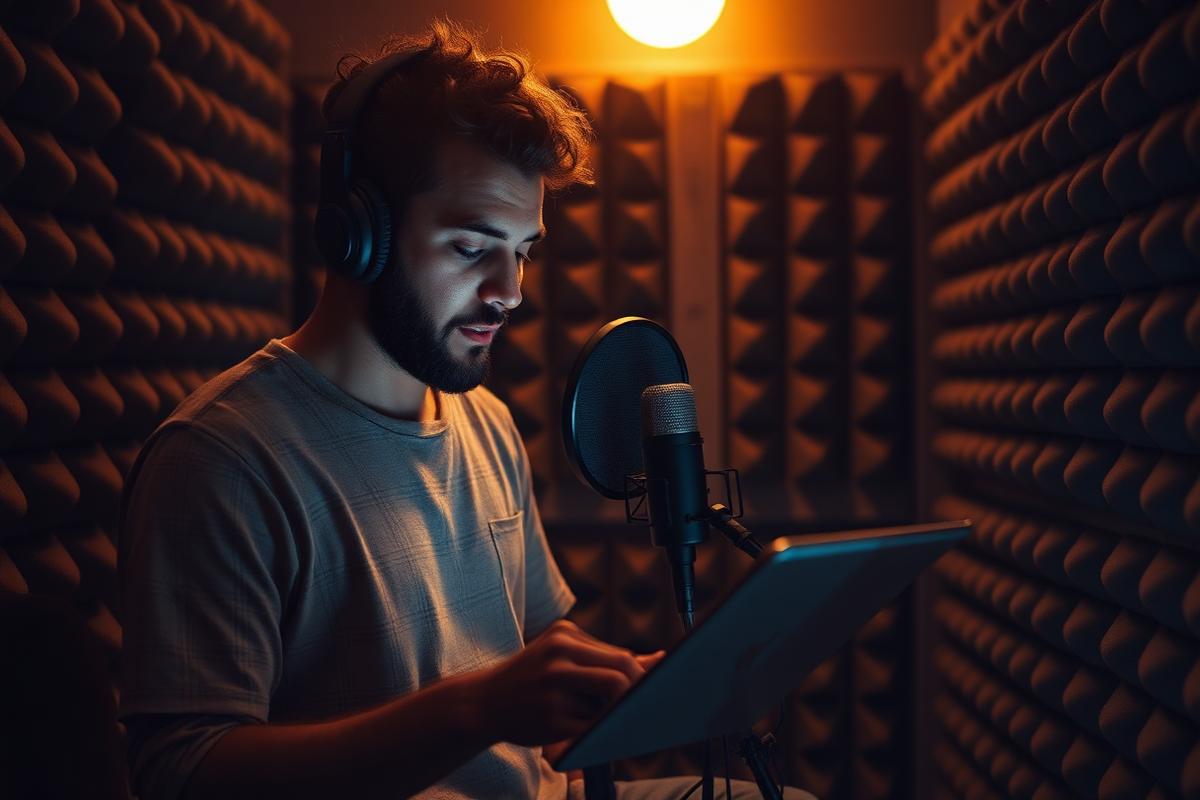
- 10-40 hours from one speaker, or multi-speaker sets
- Phonetically balanced scripts
- Session-consistent acoustics
What Kannada adds to the requirement
- North Karnataka speech has markedly different intonation and lexicon from Mysuru standard
- Retroflex ಳ and the archaic ಱ appear in older speakers and place names
- Dialects to cover: Bangalore urban, Mysuru (standard literary), Dharwad / North Karnataka, Mangaluru coastal
- Bengaluru is a migration city: Kannada speech there is mixed with English, Hindi, Tamil and Telugu. Native-only Kannada cohorts recruited in Bengaluru are hard to fill without screening for years of residence.
Metrics to track
- MOS naturalness
- Pronunciation accuracy on loanwords and names
- Prosody stability across long utterances
Failure modes
- Session drift between recording days
- Scripts that under-cover rare phonemes
- Uncleared voice-talent licensing
For Kannada specifically: Mysuru/Bengaluru standard dominates. North Karnataka (Dharwad, Kalaburagi) and coastal Mangaluru speech are barely represented in any public corpus.
Recommended cohort
Screen Bengaluru participants for native fluency and years of Karnataka residence; otherwise the cohort drifts towards second-language Kannada.
| Dimension | Typical split | Why it matters for Kannada |
|---|---|---|
| Gender | 50 / 50 | Pitch range differences change acoustic model behaviour; unbalanced cohorts bias recognition |
| Age | 18-25: 30%, 26-40: 40%, 41-60: 30% | Older speakers retain conservative Kannada forms that younger urban speakers have lost |
| Region | Karnataka / parts of Maharashtra, Tamil Nadu and Andhra Pradesh and others | Dialect spread across 5 recognised varieties |
| Education | Mixed, including below-graduate | Prompt-reading fluency correlates with education and skews prosody |
| Condition | Studio / quiet room / field | Match the noise profile of your deployment |
Suggested programme shape
Start with an evaluation set of 100 speakers spread across every Kannada dialect in scope, collected before training data. Then field 250-1,000 hours of training data from disjoint speakers.
This ordering is what makes the improvement measurable rather than assumed.
Frequently asked
Is there usable public Kannada data for tts voice building?
Mysuru/Bengaluru standard dominates. North Karnataka (Dharwad, Kalaburagi) and coastal Mangaluru speech are barely represented in any public corpus.
How many Kannada speakers do we need?
500-1,500 speakers for a training corpus, plus a disjoint evaluation cohort covering each dialect. Speaker count matters more than hours for generalisation.
Can you run this across multiple languages at once?
Yes. Multi-language programmes run to one master specification so per-language results stay comparable.
Scope Kannada data for tts voice building
Send the target metric and the languages in scope.