Speech Emotion Recognition · ଓଡ଼ିଆ
Odia Data for Speech Emotion Recognition
Detecting frustration, satisfaction and escalation in Indian-language customer conversations. In Odia, the binding constraint is usually dialect coverage and code-mixing, not raw hours.
- Language
- Odia
- Primary metric
- Per-class F1
- Typical volume
- 100-500 hours
Data profile required
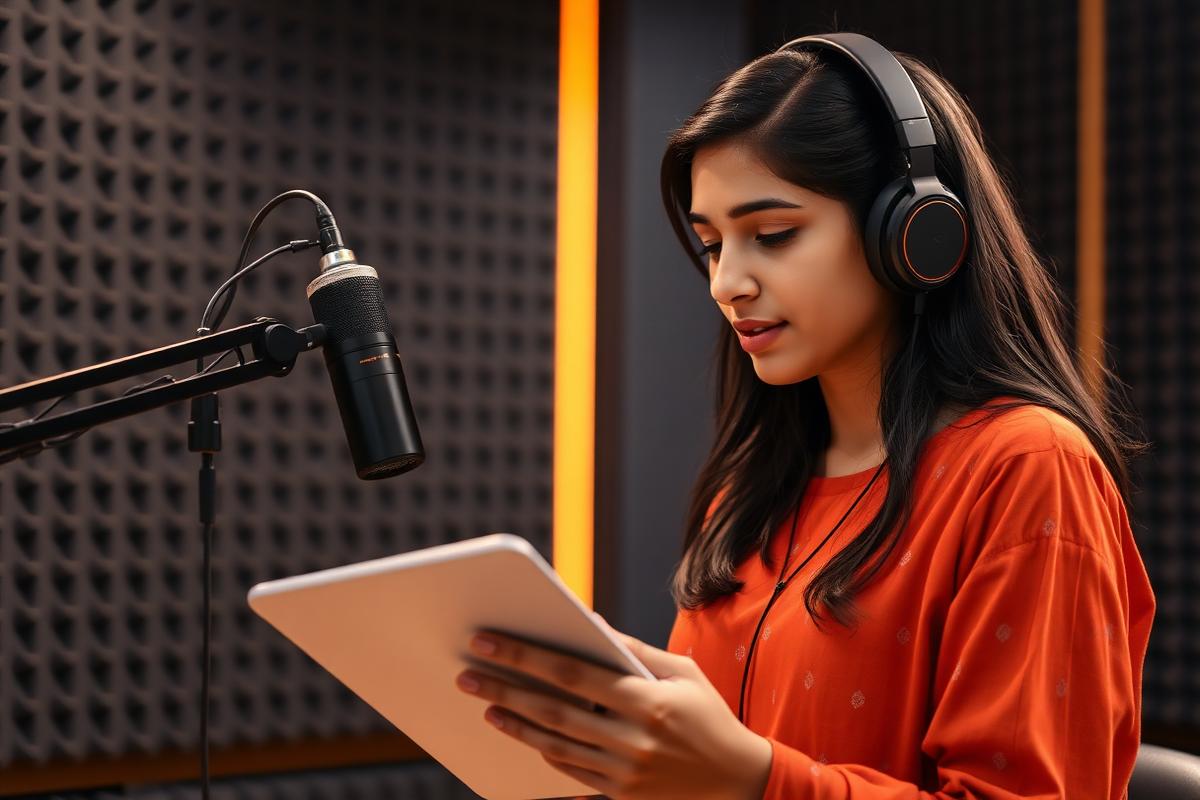
- Elicited and natural emotional speech
- Multi-rater emotion labels with adjudication
- Balanced across emotion classes
What Odia adds to the requirement
- Retains a distinct retroflex ଳ and a full retroflex series
- Sambalpuri differs from coastal Odia enough that many speakers treat it as a separate language
- Dialects to cover: Cuttack-Bhubaneswar standard, Sambalpuri (Kosli), Ganjami, Baleswari
- Urban Odia mixes Hindi and English; western Odisha mixes Chhattisgarhi and Sambalpuri forms.
Metrics to track
- Per-class F1
- Inter-rater agreement on labels
- Escalation detection latency
Failure modes
- Acted emotion only
- Single-rater labels on an inherently subjective task
For Odia specifically: Odia is one of the least-resourced major Indian languages. Sambalpuri and Ganjami are effectively absent from public data.
Recommended cohort
Western Odisha recruitment requires local field partners; remote-only recruitment yields an all-coastal cohort.
| Dimension | Typical split | Why it matters for Odia |
|---|---|---|
| Gender | 50 / 50 | Pitch range differences change acoustic model behaviour; unbalanced cohorts bias recognition |
| Age | 18-25: 30%, 26-40: 40%, 41-60: 30% | Older speakers retain conservative Odia forms that younger urban speakers have lost |
| Region | Odisha / parts of Jharkhand, West Bengal, Chhattisgarh and Andhra Pradesh and others | Dialect spread across 5 recognised varieties |
| Education | Mixed, including below-graduate | Prompt-reading fluency correlates with education and skews prosody |
| Condition | Studio / quiet room / field | Match the noise profile of your deployment |
Suggested programme shape
Start with an evaluation set of 100 speakers spread across every Odia dialect in scope, collected before training data. Then field 100-500 hours of training data from disjoint speakers.
This ordering is what makes the improvement measurable rather than assumed.
Frequently asked
Is there usable public Odia data for speech emotion recognition?
Odia is one of the least-resourced major Indian languages. Sambalpuri and Ganjami are effectively absent from public data.
How many Odia speakers do we need?
300-800 speakers for a training corpus, plus a disjoint evaluation cohort covering each dialect. Speaker count matters more than hours for generalisation.
Can you run this across multiple languages at once?
Yes. Multi-language programmes run to one master specification so per-language results stay comparable.
Scope Odia data for speech emotion recognition
Send the target metric and the languages in scope.